Choosing a single drum roller vs double drum roller starts with the material you need to compact. Are you compacting granular fill to build a stable foundation, or rolling freshly laid asphalt to achieve the required density and smoothness? This distinction matters more than drum count alone.
Single drum rollers generally suit soil and aggregate compaction, while double drum rollers are typically better suited to asphalt paving. However, soil type, lift thickness, machine dimensions, and site access all influence the final choice. This guide explains the practical differences and helps you select equipment for your project.
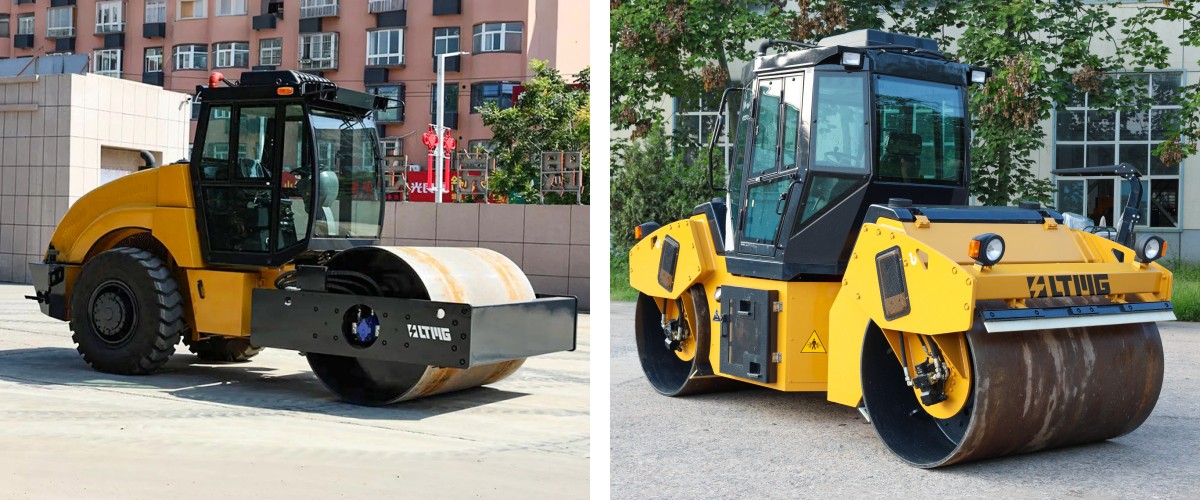
A typical ride-on single drum roller has one steel drum at the front and rubber tires at the rear. The drum applies static pressure through its weight, while vibratory models add dynamic force to compact the material.
For earthworks, the drum surface is particularly important:
A smooth drum should therefore not be treated as a universal soil compactor. Matching the drum to the material is essential for effective compaction.
Single drum rollers are often a practical first choice for road subbases, embankments, industrial yards, and building-site preparation. Buyers should also compare drive configurations: rear-wheel drive and all-wheel drive can perform differently on loose ground and slopes.
Moisture control matters just as much. If soil is too wet, additional passes may cause rutting or pumping rather than improve density. If it is too dry, moisture conditioning may be necessary. A heavier roller cannot compensate for unsuitable material conditions.
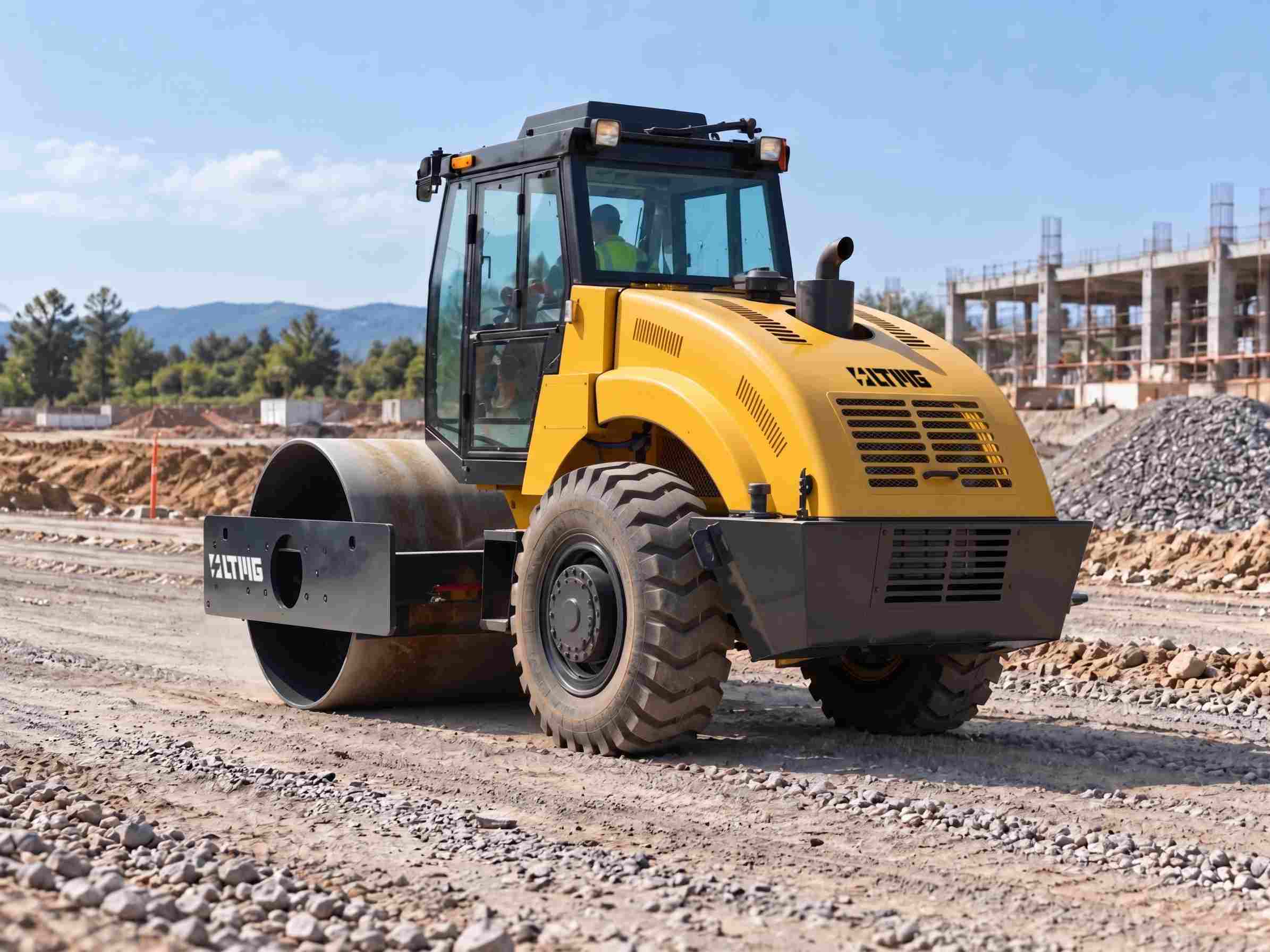
Double drum rollers, also called tandem rollers, have a steel drum at both the front and rear. Depending on the model, vibration can be applied through one or both drums, while static mode can be used for finish rolling.
Their main advantage on asphalt is controlled compaction through smooth steel contact surfaces. Effective rolling requires coordination between travel speed, vibration frequency, amplitude, and the rolling pattern. Increasing speed without adjusting the process spreads vibration impacts farther apart and may reduce compaction uniformity.
Temperature is another critical factor. Crews must achieve the target density while the asphalt mix remains workable. A roller that cannot keep pace with paving may miss the effective compaction window.
When comparing asphalt roller vs soil roller specifications, look beyond operating weight. For paving, check vibration settings, smooth speed control, visibility around the drums, and water-spray coverage. Drum wetting helps reduce asphalt pickup, while appropriate operating settings help prevent bouncing or surface marks.
Two drums do not automatically double productivity. The front and rear drums usually follow the same strip, and the required rolling pattern and pass count still depend on the mix and project specifications.
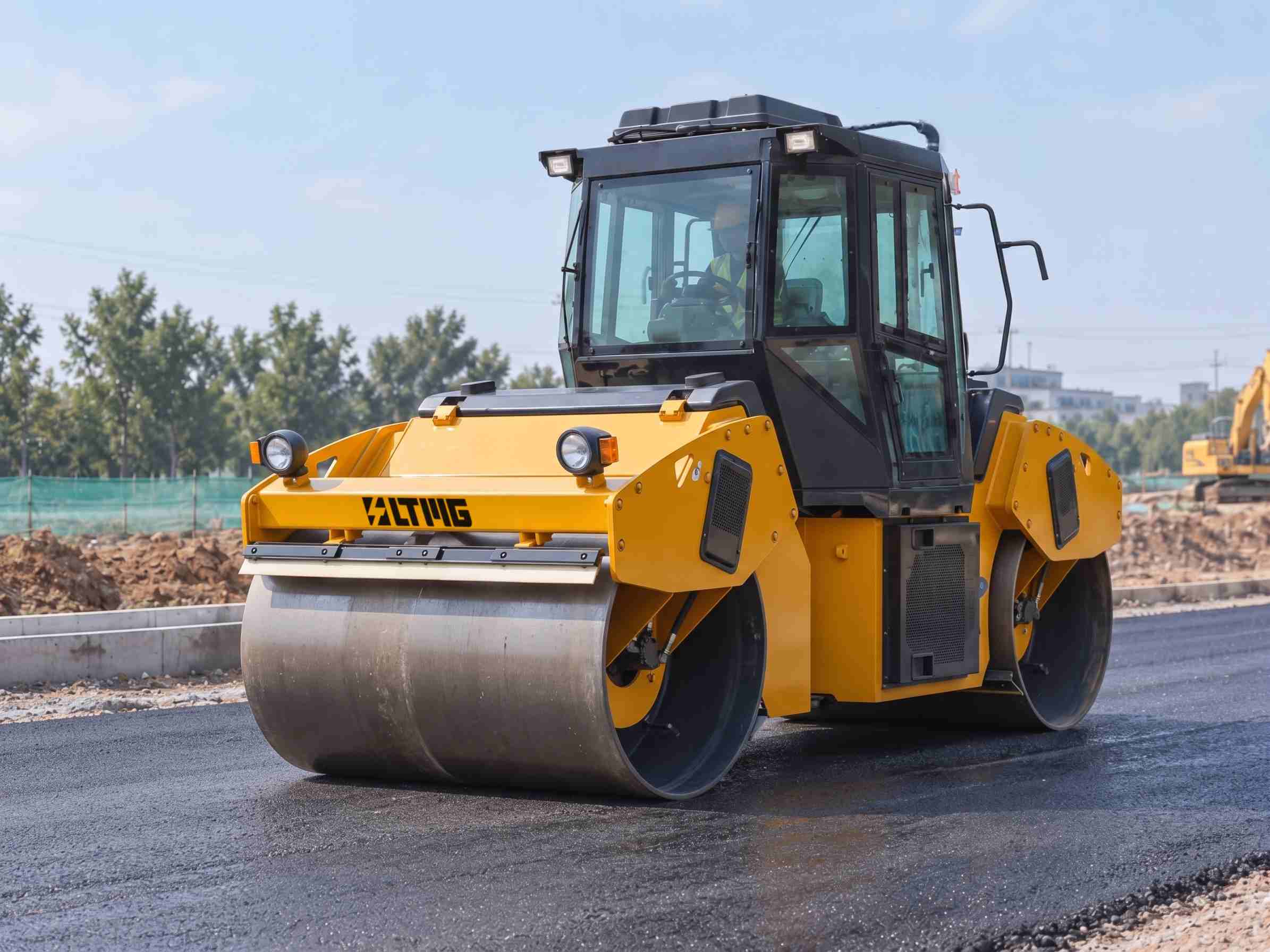
A useful road roller comparison separates compaction capability from production rate.
|
Selection Factor |
Single Drum Roller |
Double Drum Roller |
|
Main applications |
Soil, granular fill, and aggregate bases |
Asphalt compaction and pavement finishing |
|
Drum type |
Smooth or padfoot, depending on the soil |
Typically smooth steel drums |
|
Depth considerations |
Match compaction energy to soil and lift thickness |
Match vibration settings to asphalt thickness and mix properties |
|
Main production constraint |
Achieving the required density throughout each lift |
Achieving the required density within the rolling temperature window |
|
Surface requirements |
Stable, uniform support for the next layer |
Specified density, smoothness, and surface quality |
Neither design has a universal compaction depth. Effective drum roller compaction depends on material properties, moisture content, underlying support, compaction energy, and the number of passes.
As a planning reference, earthwork fill is commonly placed in lifts approximately 150–300 mm (6–12 in.) thick, although suitable thickness varies considerably with equipment and material conditions. This range is not a guaranteed compaction depth for any specific roller. Confirm the method through a trial section and field testing.
To estimate production, use:
Effective compacted area per hour ≈ effective working width × rolling speed × working efficiency ÷ required passes
Use consistent units and account for overlap when calculating effective working width. Allow for turning, water refills, interruptions, and restricted access. For earthworks, multiply the accepted compacted area by the compacted lift thickness to estimate completed volume.
In a single drum vs double drum roller comparison, maximum travel speed is therefore a poor purchasing criterion. The more useful question is how much material the machine can compact to the required standard during a normal shift.
A double drum roller is not automatically more maneuverable because it has two drums. Compact tandem models often suit narrow paving areas, but actual access depends on machine dimensions and steering geometry.
Compare the following:
On narrow asphalt roads, smooth steering and controlled direction changes are also important. Entering the site is only part of the requirement; the operator must cover the surface evenly without abrupt turns or reversals.
For extremely confined areas, a walk-behind roller or smaller compactor may be more practical than either larger ride-on option.
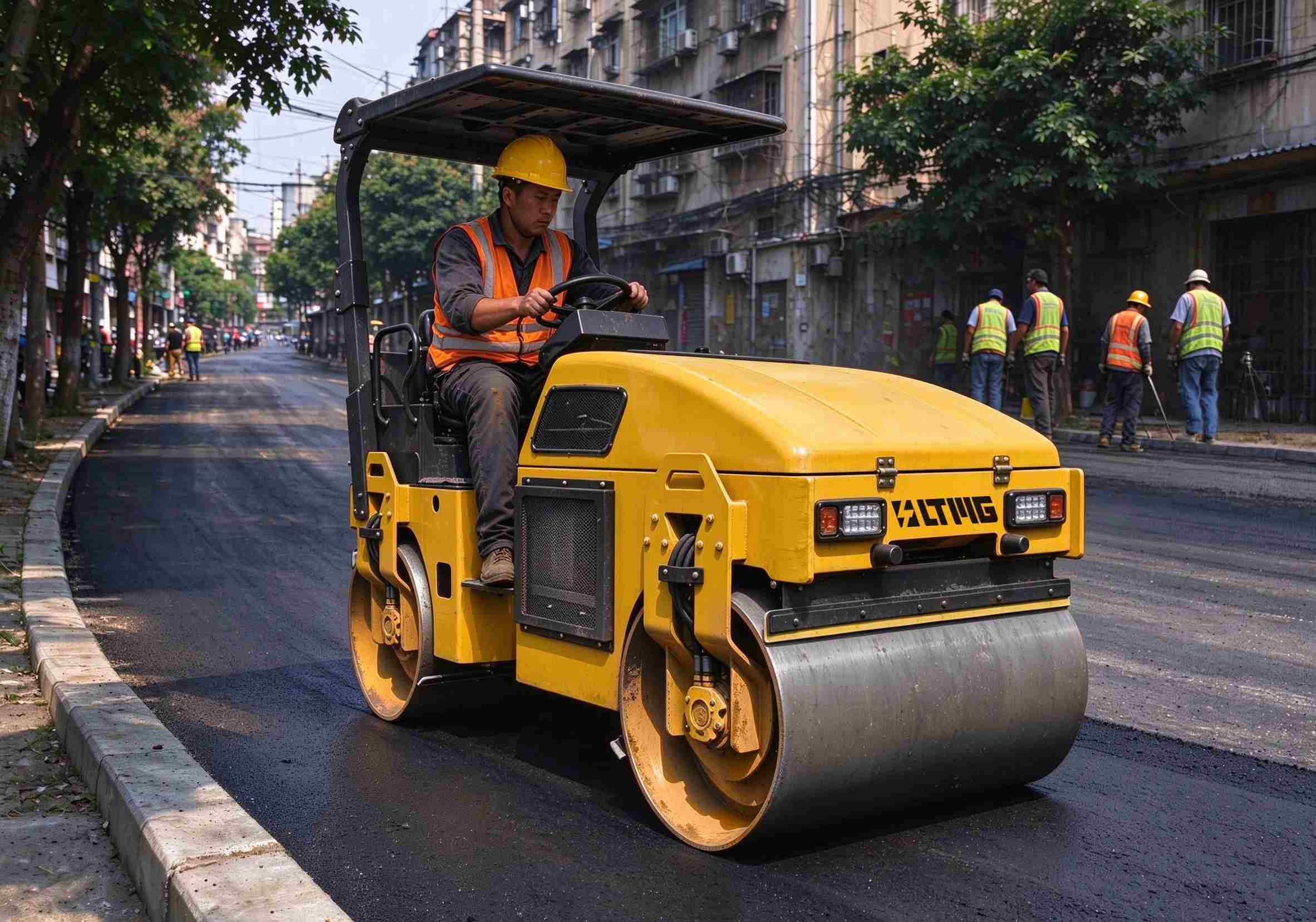
Choose by construction stage rather than project name alone. A road project may require both roller types, while an industrial site may involve both ground preparation and asphalt paving.
Road subbase, site backfill, and aggregate base construction require steady travel over loose material and consistent rolling speeds. Beyond tonnage, buyers should consider the drive system and low-speed control.
The LTMG LTC120 single drum roller is a candidate for these applications. It combines fully hydraulic drive to the front drum and rear wheels with hydraulic front-drum vibration and articulated steering. Driving both the drum and rear wheels helps maintain traction on loose fill, while two-range stepless speed control in forward and reverse lets operators adjust travel speed to material conditions and rolling requirements. These features are particularly relevant to foundation and site work involving repeated passes, frequent reversals, and large areas to cover.
The drum must still match the fill: a smooth drum is a suitable starting point for sand, gravel, and crushed aggregate bases, while cohesive soils require further assessment of whether a padfoot configuration is needed.
Parking lots, local roads, and patch repairs often involve limited space, frequent direction changes, and hot asphalt sticking to the drums. Ease of control and drum cleanliness are therefore as important as compaction capability.
For these conditions, we recommend considering the LTMG LTC35 double drum roller. Its compact body combines hydraulic drive and vibration on both drums with hydraulic steering, making it easier to organize back-and-forth rolling in restricted areas. Scrapers and sprinkler systems on both drums help remove buildup and reduce asphalt pickup. Intermittent sprinkling allows operators to regulate water delivery as needed to keep the drum surfaces appropriately wet.
These features address the handling and surface-quality demands of parking areas, narrow roads, and small repairs. For continuous paving over larger areas, assess paving width and production speed to determine whether a wider tandem roller with greater capacity is required.
If your business handles both soil compaction and asphalt paving, you can equip each stage with the appropriate roller. A single drum machine handles fill and base materials suited to its drum type, while a tandem roller handles asphalt compaction and finish rolling. Using the two together helps meet foundation support and pavement smoothness requirements.
Base equipment size and quantity on the workload, project scale, and schedule for each type of work. If you are purchasing one machine initially, prioritize your main application and expand your equipment fleet as other needs develop.
To select a configuration from the LTMG road roller range, share your main compaction materials, planned lift thickness, site access width, and daily production requirements. LTMG can recommend suitable equipment, provide a quotation, and help identify the emissions requirements and appropriate solutions for your target market.
Some smooth-drum models can handle certain asphalt applications when approved by the manufacturer and suitably equipped. However, a soil-oriented machine’s vibration settings, rear tires, and drum-wetting equipment may make it unsuitable for achieving the required finish. For regular asphalt paving, a tandem roller is generally the more appropriate starting point.
It can compact certain granular base materials in appropriate lifts, provided testing confirms the required result. It should not be assumed suitable for thick earthwork lifts or cohesive clay. Those applications may require a heavier soil compactor or padfoot drum.
Only within the capabilities of the specific machines and the approved compaction method. Some applications overlap, but replacing one with the other can affect density, productivity, and surface finish. Check the material, lift thickness, equipment configuration, and acceptance requirements before making the substitution.

टेलीफोन : +86 195 5920 7570
ईमेल : market@ltmg.com
Whatsapp : +86 195 5920 7570
जोड़ना : LTMG Group, Electronics City(Xiamen) International Innovation Center, No.23, Duiying Road, Jimei District, Xiamen, China


नवीनतम उत्पाद जानकारी और ऑफ़र जानकारी प्राप्त करें



